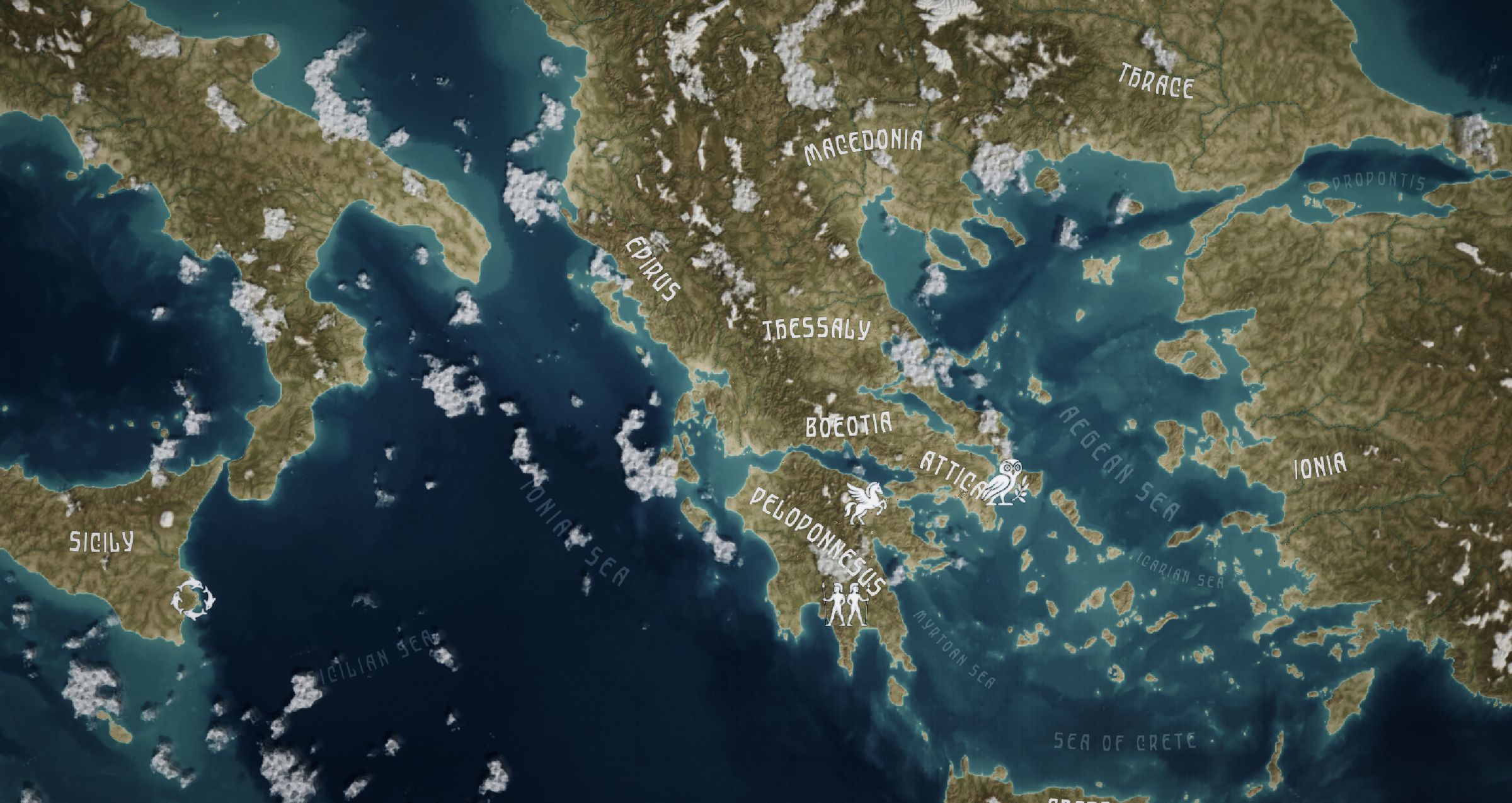
The Greek world from above, from Sicily to Ionia, with the regions lettered on the map and the emblems of Athens, Corinth, Sparta and Syracuse standing on it

The

The Thucydides Atlas

A living map to guide you through The History of the Peloponnesian War.

Coming soon to iPad, Mac and PC

Θουκυδίδης Ἀθηναῖος ξυνέγραψε τὸν πόλεμον τῶν Πελοποννησίων καὶ Ἀθηναίων

Thucydides, an Athenian, wrote the history of the war between the Peloponnesians and the Athenians, beginning at the moment that it broke out, and believing that it would be a great war and more worthy of relation than any that had preceded it.

Book 1, chapter 1, in Richard Crawley's translation

The Atlas is his whole History, set on the ground it describes. Open a chapter and the map turns to its season: fleets put out along their routes, troops march, cities change sides, and the fields burn where the text says they burned.

A beautiful tool for academics and students, a gateway for the layperson to the world of Ancient Greece.

I

The original text linked to the map

All eight books in Crawley's translation, 917 chapters, with the original Greek available to compare at a tap. The text sits in a column of dark glass at the map's edge. Bookmark a chapter, write your own notes between the passages, and come back to the page you left.
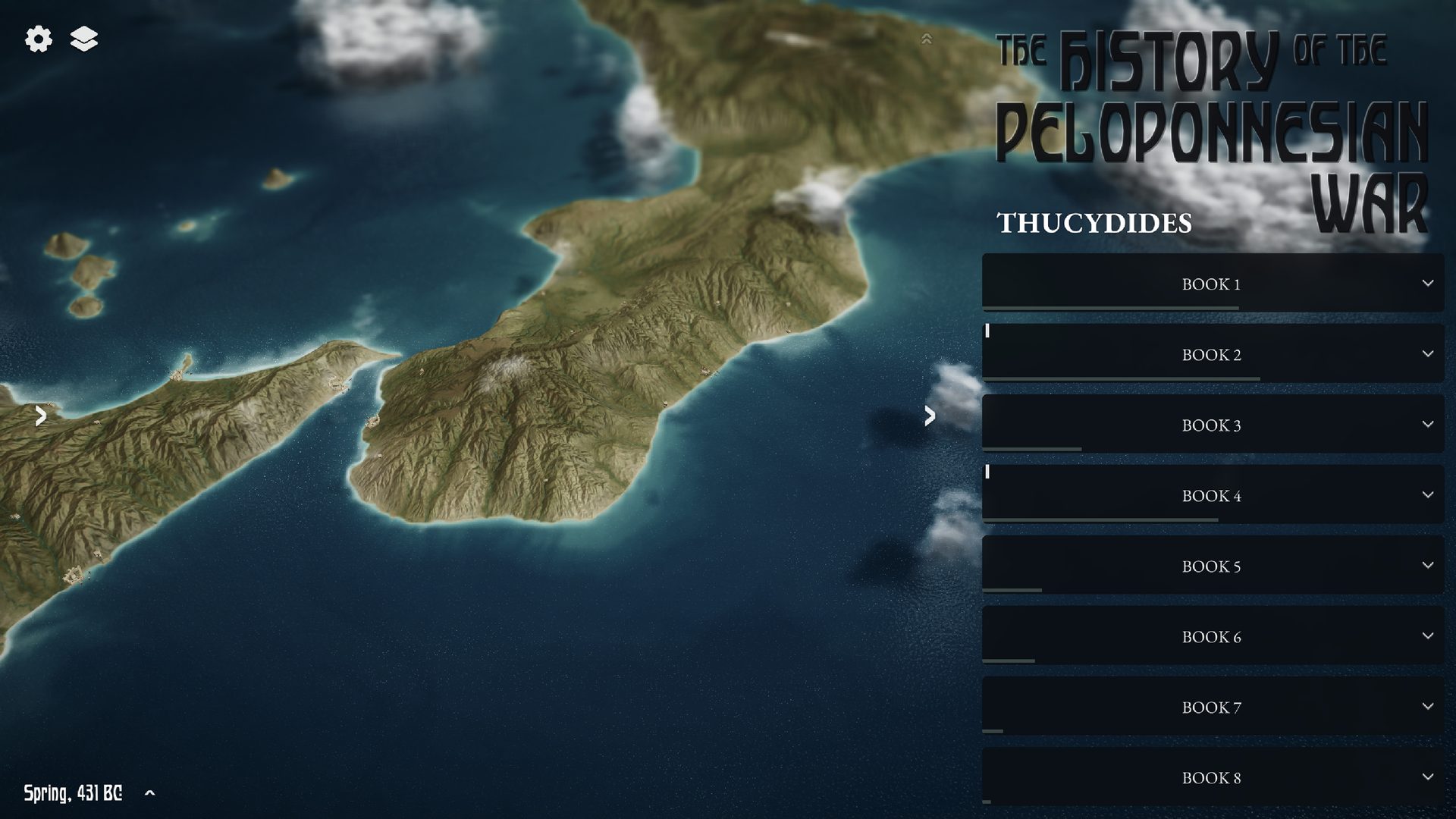
The History of the Peloponnesian War in eight book bars on dark glass, beside the map of the strait between Italy and Sicily

II

A living world

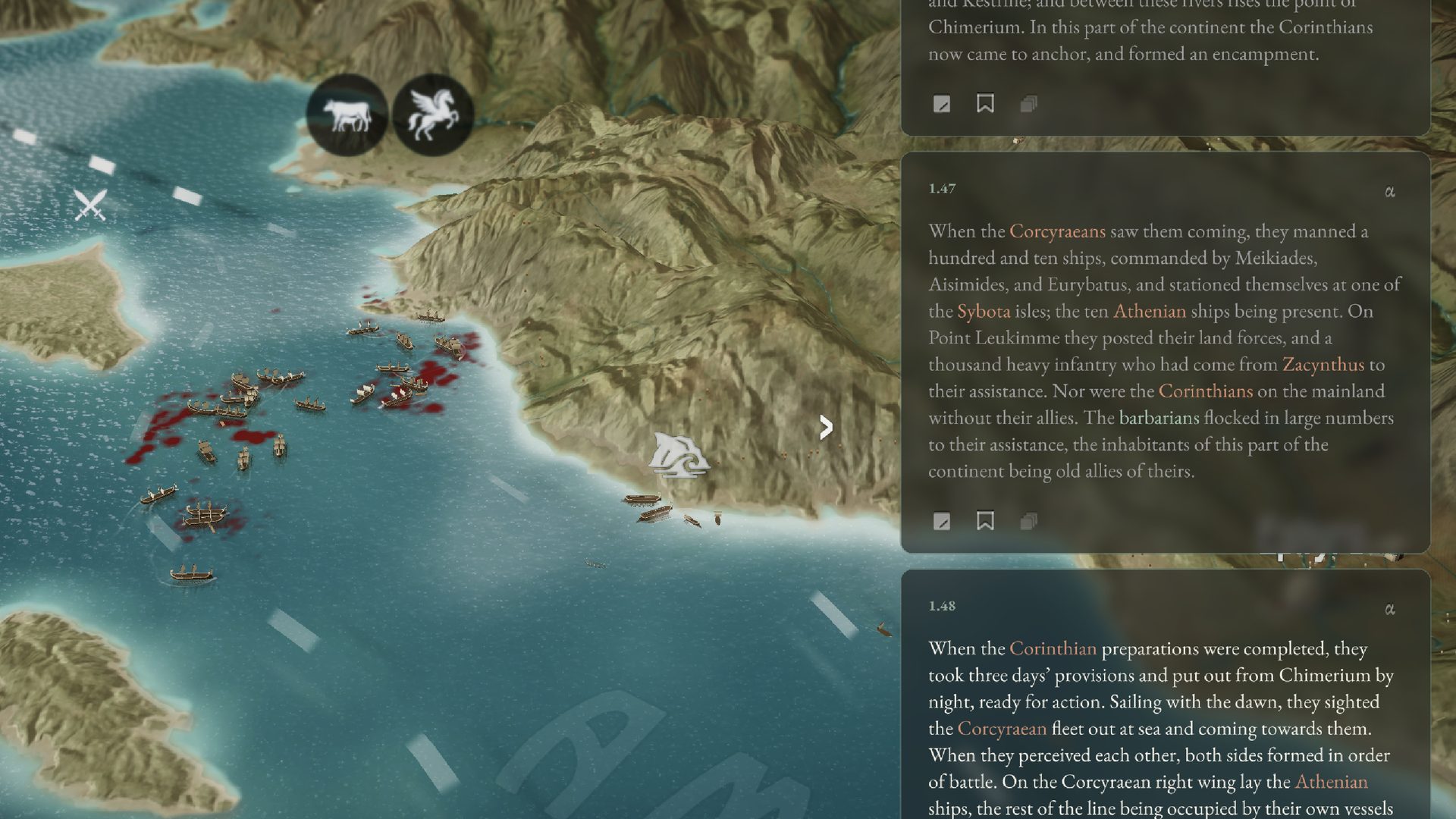
Twenty-seven years of war run on one clock. As you read, the ships sail the trade routes, citizens ply the fields of their Polis and armies march the roads. Seasons turn and the landscape reflects it, the carnage of the war accumulating.

The sea battle off Sybota: triremes locked together between Corcyra and the mainland, the fleets’ badges above them, chapter 1.47 open beside the map

III

Battles shown where and how they actually happened

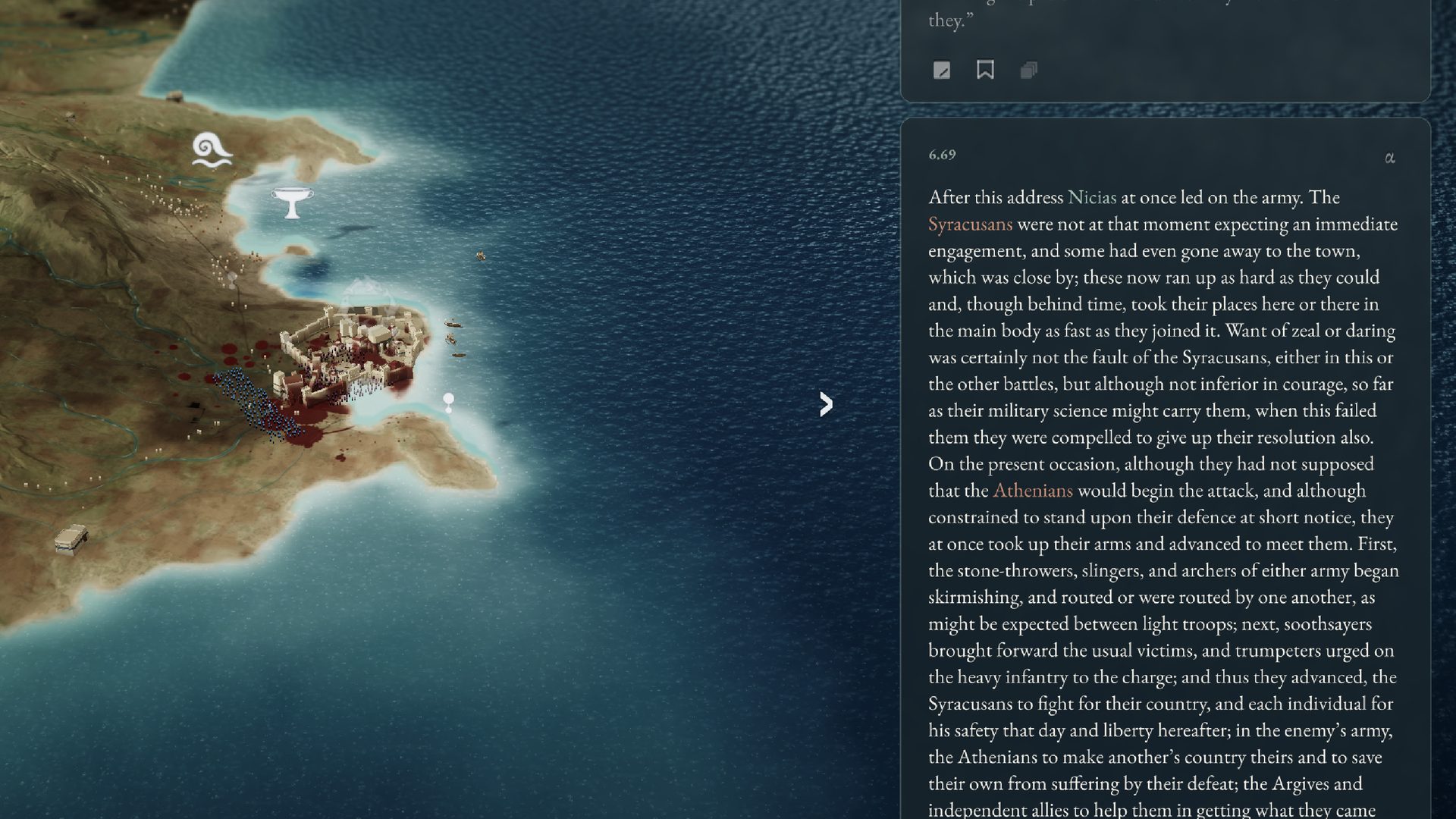
When a chapter comes to a battle, the map plays it whether Hoplites, Triremes or unprovoked slaughter. The lines close on the field at Delium and Mantinea, a wing gives way and runs for the hills. In the Gulf and the Great Harbour of Syracuse the ships wheel, ram and go down, and the wreckage stays on the water.

Syracuse in winter 415 BC: the armies meet outside the walls as chapter 6.69 is read beside the map

IV

A reference shelf for every name, place and idea

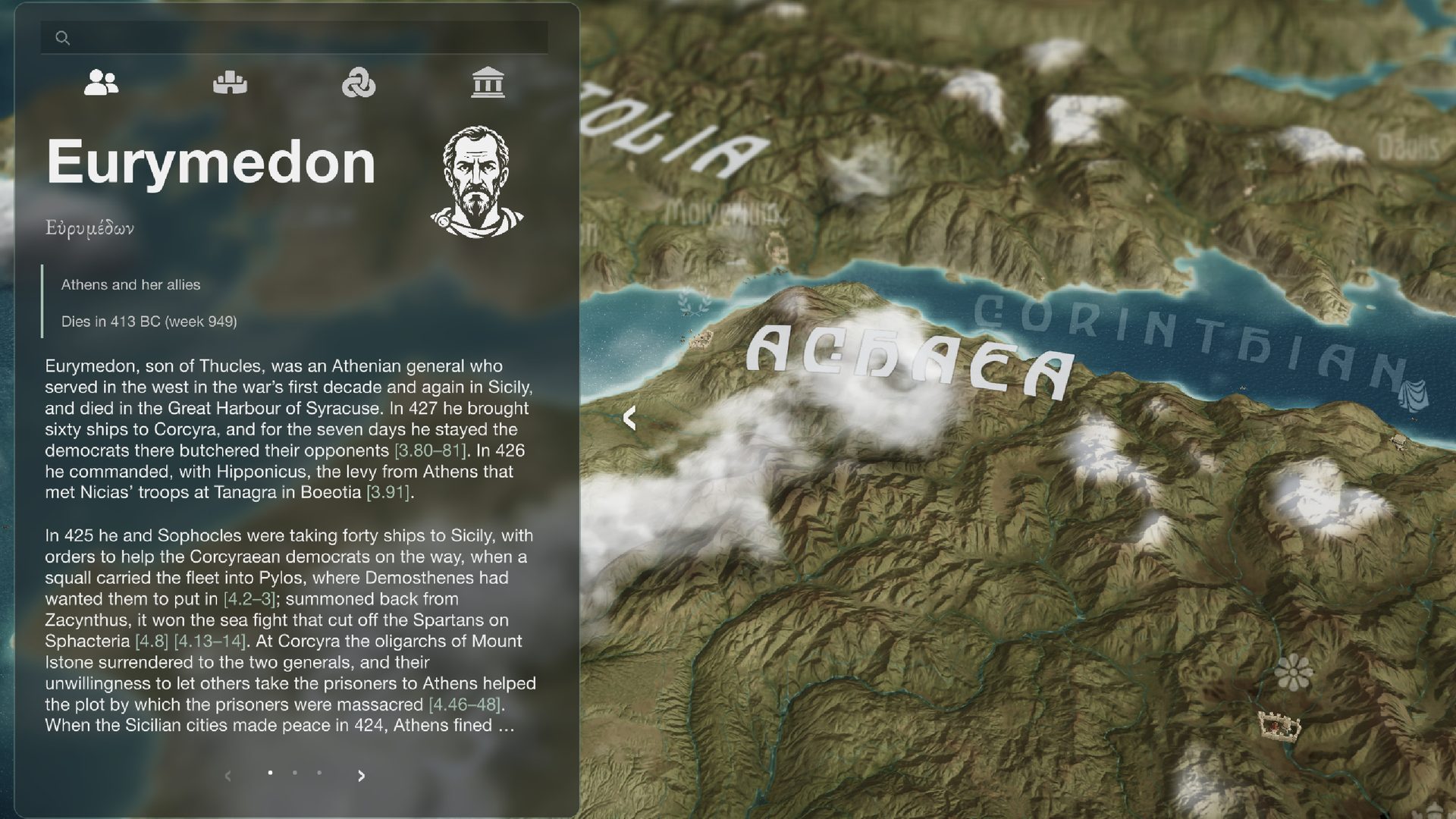
Each of 253 places, 82 people and 44 gods has its own wiki page within the app, written from the History and the ancient authors and cited chapter by chapter. Tap a city on the map to open it. Every citation is a door back into the text.

The reference page for the Athenian general Eurymedon, with his portrait and cited account, over the map of Achaea and the Corinthian Gulf

V

The Dark Age

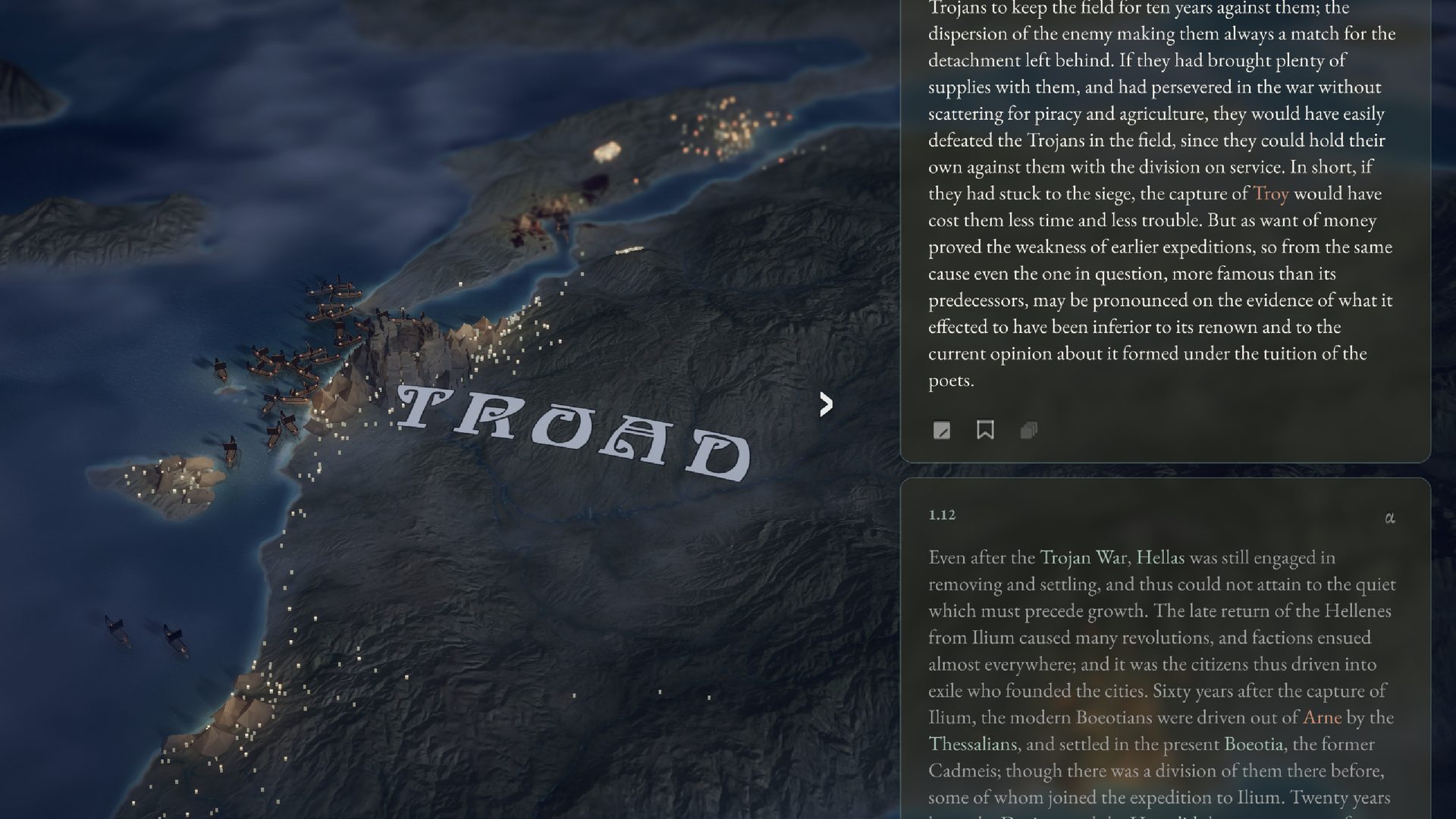
In setting up his epic, Thucydides opens by looking back, to Minos and his fleet, to Troy, to the wandering of the peoples. The Atlas follows him into the dark: the land empties, torches move along the shores, and the first walled towns rise out of the ground as he names them.

The Troad in the dark of the heroic age: ships drawn up on the shore and torches around Troy, chapter 1.11 open beside the map

Offline, always

The Atlas never connects to the internet. Everything it needs is in the app.

No accounts, no tracking

No sign-in, no analytics, no advertising. Your notes and your place stay on your device.

Yours to share

Export your notes as a file and hand them to another reader, or open theirs.

Coming soon

Questions, or word when it arrives: hello@wundercog.com

Credits

Text
Thucydides, The History of the Peloponnesian War, translated by Richard Crawley
Music
Amber Allayiotis
Made by
Wundercog

The full list of sources and licences is in the app, under Settings, About.